39.69° N · 3.02° E — THE YACHT MEDIC
1. Medical Training for the Moment Help is A Long Way Away
Approved - STCW Medical qualifications and Psychological First Aid at Sea
Taught by a Health Educator, Emergency Nurse & Professional Sailor with 30 years on the water, not just in the classroom.
MCA Approved - STCW Compliant in Palma de Mallorca, and Onboard Worldwide
MCA Approved - STCW Compliant
Onboard Training Globally
Classroom Training Palma de Mallorca
The recognised maritime medical qualifications - for anyone designated to give first aid or take charge of medical care onboard.
Medical First Aid (3 Days )
Proficiency in Medical Care (4.5 Days)
Update in Medical Care (3 Days)
Psychological First Aid (0.5-2 Days)
Bespoke Training
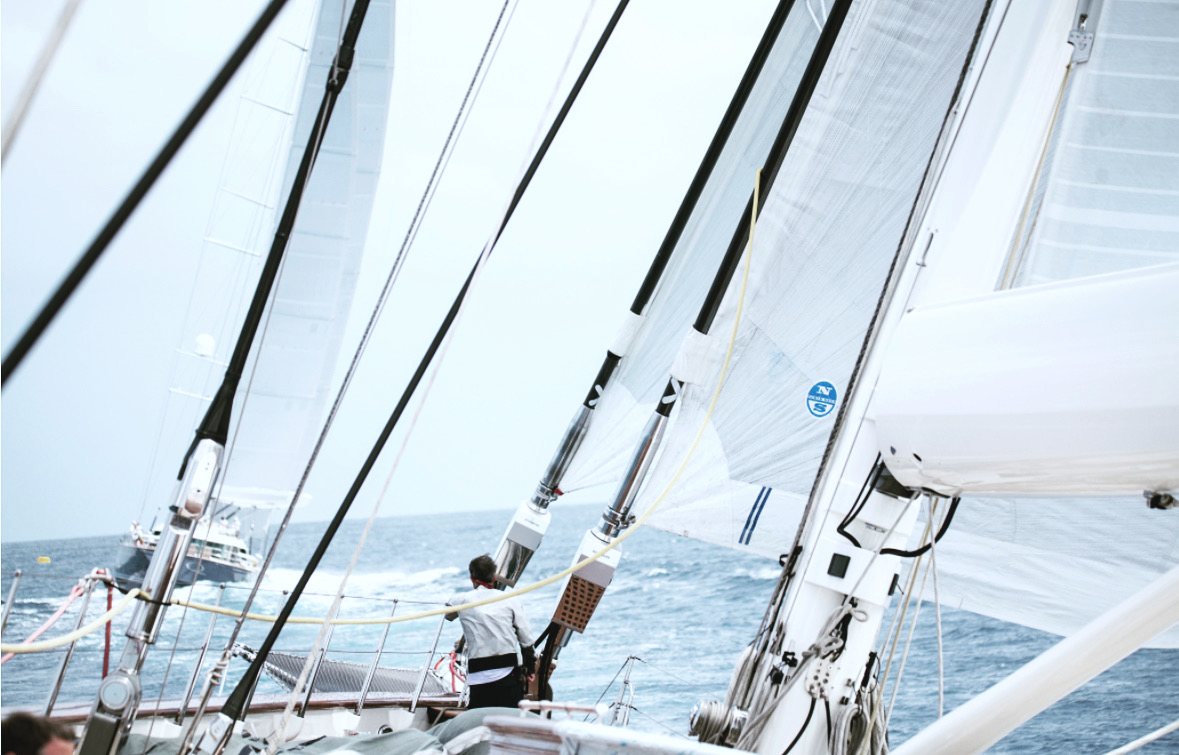
Psychological First Aid at Sea
Every crew knows what to do about a wound, almost none know what to do about the fear.
The missing part of the medical kit.
The WHO Look, Listen & Link model adapted for maritime.

Resilience at Sea
Resilience at Sea — a 27-page handbook for superyacht crew on the people problems nobody trains you for: an owner losing their temper, a crewmate falling apart, and the aftermath everyone pretends didn't happen.
With practical scripts, clear escalation thresholds, and a tear-out quick reference. Not therapy, not clinical training. The words to use when help is hours away.
.
About Amanda
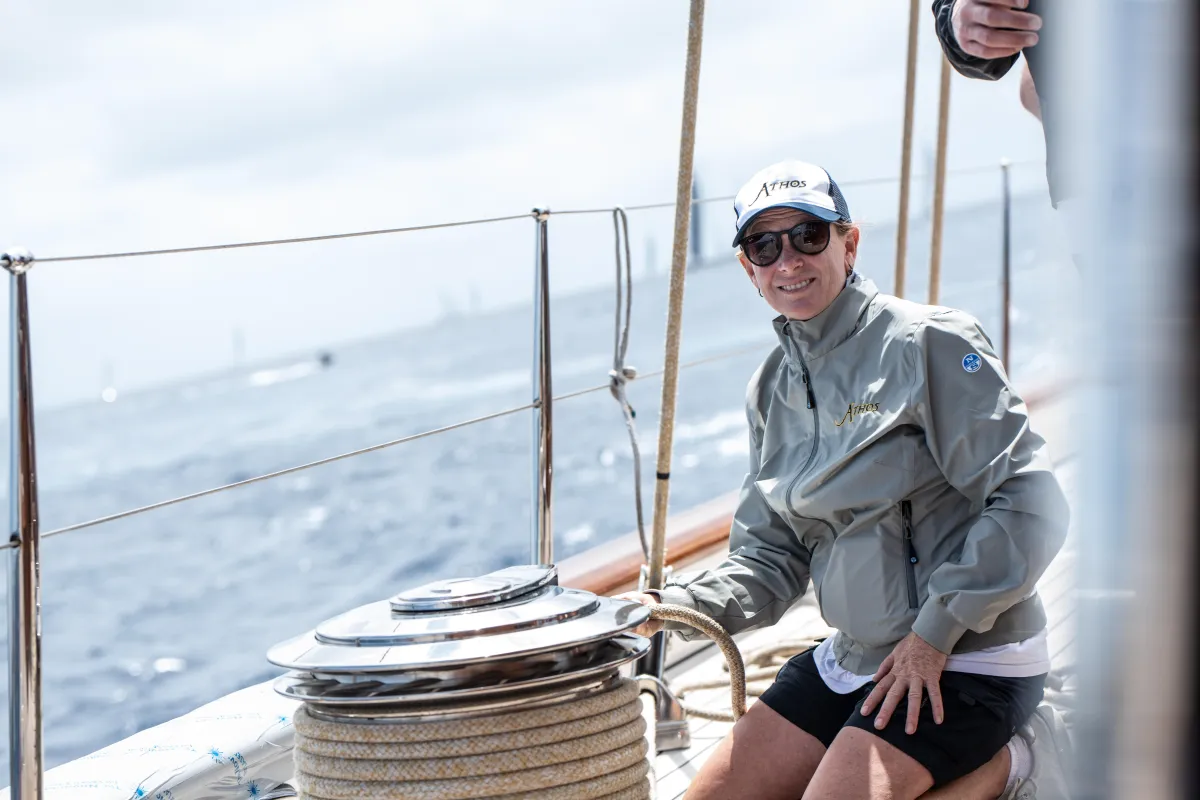
The Yacht Medic is Amanda Hewson Beaver — a registered nurse, former paramedic, and rescue and retrieval nurse who has been the nearest person more times than she can count. In the outback, in refugee camps, offshore, and on the deck of a boat a long way from help.
She has been the medic on the Sydney Hobart, the Fastnet, and the Rolex 600, and has trained Olympic, Ocean Race, America's Cup, and J Class teams. She teaches what she has actually done — which is why crew remember it.
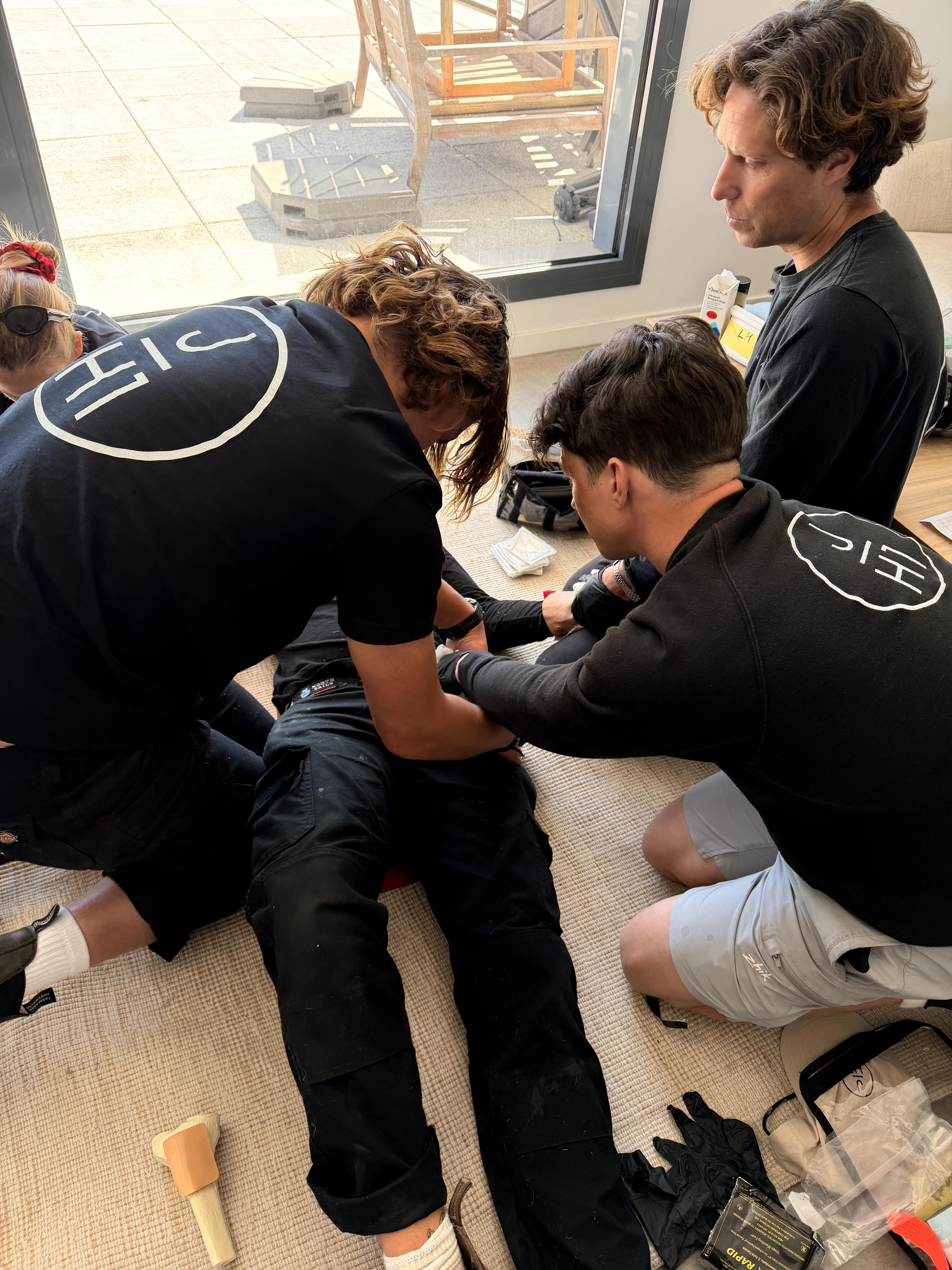
Managing Offshore Hand Injuries with First Aid
First Aid, Offshore Safety, Yachting
Fingers, Blocks & Winches: Managing Hand Injuries Offshore with Modern First Aid
Working around lines, blocks and winches exposes sailors to severe hand and finger injuries. This guide explains how to recognise and manage common injuries using up‑to‑date first aid principles from the latest American Heart Association and American Red Cross first aid guidelines (2024 update, often referenced in 2025 training), adapted for offshore environments where help may be hours away.
Why Early Intervention Matters Offshore
On land, a serious finger injury can reach a hospital within minutes. Offshore, you may be several hours from professional care. In this setting, early intervention is not optional; it is the difference between keeping function – or even the finger – and permanent disability or life‑threatening blood loss. The 2024 American Heart Association and American Red Cross first aid guidelines emphasise rapid assessment, early bleeding control, and prompt activation of emergency medical services (EMS) whenever a condition may worsen without advanced care (professional.heart.org).
Around winches and blocks, hands are exposed to high loads, crushing forces, and rapid line movement. Injuries escalate quickly: rope burns become infected, crush injuries evolve into compartment syndrome, and amputations are time‑critical. A structured response – protecting the scene, controlling bleeding, protecting the patient, and escalating early – should be part of every vessel’s safety culture.
📌 Key Takeaway: Treat every significant hand or finger injury offshore as potentially limb‑threatening. Act early, act methodically, and plan for evacuation sooner rather than later.
Core First Aid Priorities in Offshore Hand Injuries
Scene safety: Stop the winch, ease or secure the line, and prevent further movement before touching the casualty. Never put another crew member’s hands into the danger zone to “free” a trapped finger while systems are still loaded.
Primary assessment: Quickly check responsiveness, airway, breathing and circulation. Serious bleeding or signs of shock take priority over local wound care, in line with AHA first aid guidance on life‑threatening emergencies.
Control bleeding: Apply direct pressure with a clean pad as the first step for external bleeding, as recommended by current guidelines, then escalate to a pressure bandage or tourniquet if bleeding is severe and not controlled by pressure alone (professional.heart.org).
Protect the patient: Keep the casualty warm, calm and lying or seated safely. Prevent them from using the injured hand. Reassure them and explain what you are doing; anxiety and cold both worsen shock.
Escalation and communication: For anything more than a minor superficial injury, plan for medical review. Use VHF, satellite phone or onboard medical support services early – do not wait to see “if it improves”.
Rope Burns: Friction Injuries from Running Lines
Rope burns occur when a loaded line runs through or across the hand, creating a friction burn. On yachts, this is common when easing sheets too quickly, grabbing a running halyard, or trying to stop a runaway line. These burns can range from superficial redness to deep, open wounds with significant tissue loss (Healthline).
First Aid for Rope Burns
Stop the mechanism: Secure or ease the line safely and move the casualty away from winches and blocks to prevent further injury.
Cool the burn: Place the affected area under cool running water (not ice or very cold water) for 10–20 minutes to reduce pain and limit tissue damage (Mayo Clinic). Offshore, this may mean using a clean jug or bottle to pour water continuously over the burn into a bucket or over the scupper.
Clean gently: Once cooled, gently rinse away salt, dirt or rope fibres with clean water. Avoid harsh scrubbing or strong soaps, which can irritate the wound (WebMD).
Protect the wound: Apply a thin layer of antiseptic or burn gel if available, then cover with a sterile, non‑stick dressing and lightly bandage. Wrap loosely to avoid restricting circulation to the fingers.
Do not break blisters: Intact blisters reduce infection risk. If a blister bursts accidentally, treat it as an open wound, clean gently, and redress.
Seek medical advice for deep burns, burns crossing joints, or if there are signs of infection (increasing redness, swelling, pus, fever). Offshore, this typically means radio‑medical consultation and planning for evacuation at the next safe opportunity.
Lacerations: Cuts from Shackles, Blocks and Hardware
Lacerations to fingers often occur when hands slip near sheaves, cleats, open shackles or sharp fittings. Even apparently small cuts can cause significant bleeding in the confined space of a cockpit or foredeck, and contaminated wounds are at high risk of infection in a damp, salty environment.
First Aid for Finger Lacerations
Control bleeding: Apply firm, direct pressure with a sterile pad or clean cloth. If blood soaks through, add more material on top – do not remove the original pad, as this may disrupt clotting. Elevate the hand above heart level if possible, in line with modern bleeding control principles.
Irrigate the wound: Once bleeding is controlled and if the cut is not spurting or heavily bleeding, gently rinse with clean water or saline to remove visible dirt and salt. Avoid using strong antiseptics directly inside deep wounds, as they can damage tissue; use them sparingly on surrounding skin instead.
Assess depth and function: Ask the casualty to move each finger and check for normal sensation. Deep lacerations with visible tendon, bone, fat, or loss of movement or feeling require urgent medical assessment and likely suturing or surgical repair.
Dress and immobilise: Apply a sterile non‑stick dressing and secure with a bandage or adhesive strips. Splint the injured finger to an adjacent finger or small padded splint to reduce movement and pain.
💡 Pro Tip: Any laceration that may need stitches should ideally be seen within 6–12 hours. Offshore, this means contacting medical support immediately to plan the fastest realistic route to care.
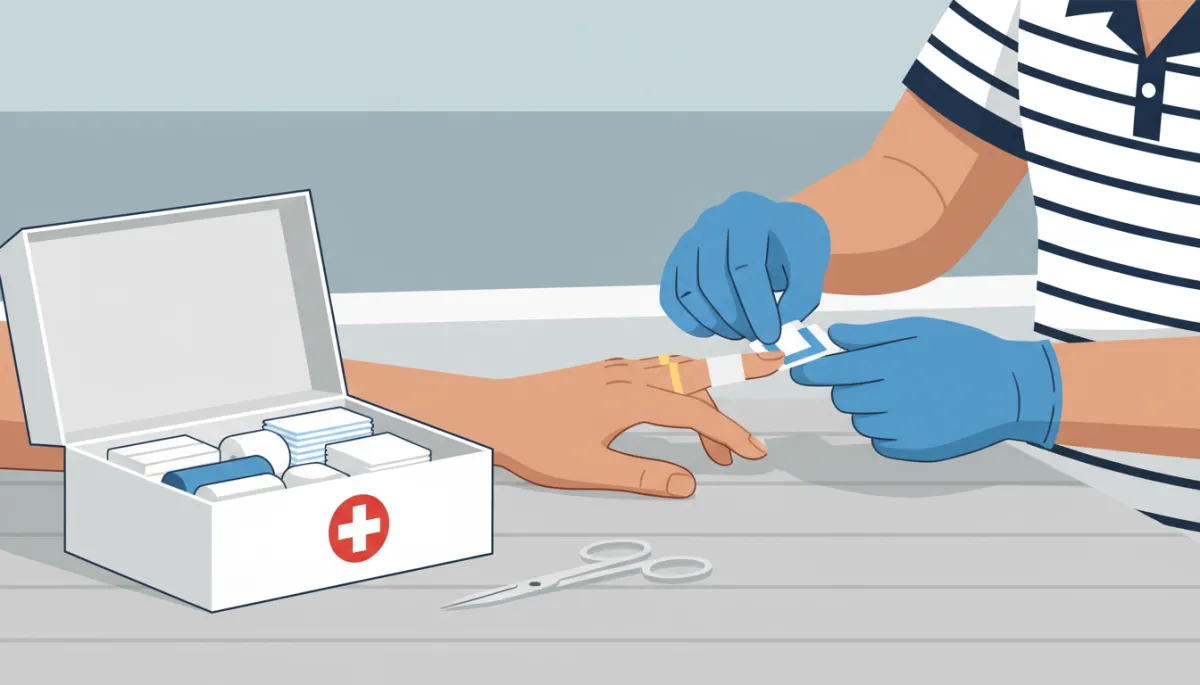
Prompt, clean dressing and immobilisation can preserve function and reduce infection risk.
Crush Injuries: Fingers Trapped in Blocks, Winches or Cleats
Crush injuries occur when a finger is caught between a loaded line and a winch drum, jammed in a block, or trapped under hardware. These injuries can damage skin, muscle, bone, blood vessels and nerves. Even if the skin looks relatively intact, internal damage may be severe, and there is a risk of crush syndrome or compartment syndrome in more extensive injuries (St John; NCBI).
First Aid for Crush Injuries to Fingers
Ensure safety before release: Depower sails, ease sheets, and secure the boat’s motion if possible. Do not attempt to free a trapped finger while lines are under heavy load; sudden release can cause further injury elsewhere on the body or to other crew members.
Call for help early: As recommended for serious trauma, activate emergency medical support as soon as a significant crush injury is recognised. Offshore, this may mean contacting a tele‑medical provider or coastguard while first aid is underway (Medscape).
Control any bleeding: Use direct pressure and dressings as for lacerations. If there is heavy bleeding that does not respond to direct pressure, follow your training regarding tourniquet use, consistent with modern bleeding control guidance from AHA and related bodies.
Immobilise and elevate: Splint the injured finger and hand in a position of comfort, elevate if possible, and apply a cool pack wrapped in cloth to help reduce swelling. Do not apply ice directly to the skin, and avoid tight bandaging that may further compromise circulation.
Monitor for shock: Pale, clammy skin, rapid pulse, fast breathing, or confusion may indicate shock. Lay the casualty flat, keep them warm and calm, and prepare for urgent evacuation.
Nail Bed Injuries and Subungual Haematoma
A common but extremely painful injury occurs when a finger is slammed in a hatch, caught under a block, or pinched by a winch handle. Blood can collect under the nail (subungual haematoma) or the nail can partially tear away, damaging the nail bed. While often less dramatic than open fractures, these injuries can be very painful and may hide underlying fractures.
First Aid for Nail Bed Injuries
Control minor bleeding: If the nail edge is torn and bleeding, apply gentle pressure with a sterile pad and dress the fingertip with a non‑stick dressing or fingertip bandage.
Cool for pain relief: Use a cool pack wrapped in cloth to reduce pain and swelling. Avoid prolonged immersion in icy water, which can worsen tissue damage.
Do not remove the nail: Even if partially detached, the nail can act as a natural splint and protective layer. Secure it gently with a dressing rather than pulling it off, unless specifically directed by a medical professional.
Large, tense subungual haematomas can sometimes be drained in a clinical setting to relieve pain, but this should not be attempted without proper training and sterile equipment. Offshore, focus on pain management, protection, and arranging medical review as soon as feasible, particularly if the entire nail is discoloured or there is suspected fracture of the fingertip.
Suspected Fractures and Dislocations of Fingers
High loads on sheets and halyards, sudden snatches, or being thrown against hard structures can fracture or dislocate finger bones and joints. Signs include deformity, swelling, intense pain, inability to move the finger normally, or a finger that looks “out of place”.
First Aid for Suspected Fractures / Dislocations
Do not attempt to straighten: Unless you are specifically trained and directed by a medical professional, do not try to “pull” a dislocated finger back into place. Incorrect manipulation can damage nerves, blood vessels and joint surfaces.
Immobilise in position found: Gently support the injured finger with padding and secure it to an adjacent finger (buddy taping) or to a small splint, keeping it in the most comfortable position. Ensure bandaging is snug but not tight enough to impair circulation (check for warmth, colour and sensation beyond the bandage).
Apply cold packs: Use wrapped cold packs to limit swelling, applied for up to 20 minutes at a time, with breaks in between. Never place ice directly on skin.
Escalate for imaging and reduction: All suspected fractures and dislocations require medical evaluation and usually X‑rays. Offshore, this means early communication with shore‑based medical support and planning for the earliest safe port with appropriate facilities.
Degloving Injuries: Severe Skin and Soft Tissue Loss
Degloving injuries occur when skin and soft tissue are forcibly stripped from the finger, often by a running line or rotating winch. These are severe, limb‑threatening injuries with high infection risk and potential for permanent loss of function. They are surgical emergencies on land; offshore, they demand meticulous first aid and urgent evacuation planning.
First Aid Priorities in Degloving
Control bleeding: Follow the same hierarchy as for other severe bleeding: direct pressure first, then pressure dressings, and tourniquet only if life‑threatening bleeding cannot be controlled otherwise, consistent with modern first aid guidance on haemorrhage control.
Protect exposed tissue: Do not attempt to clean aggressively. Lightly rinse gross contamination with clean water if necessary, then cover exposed tissues with sterile, non‑adherent dressings moistened with sterile saline if available, and then a dry outer layer. Keep the dressing bulky to protect from further trauma.
Save any avulsed skin: If there is a flap or completely stripped skin segment, handle it gently by the edges, rinse briefly with sterile saline if contaminated, wrap it in sterile moist gauze, place it in a waterproof bag, and then place that bag on ice or in cold water. Do not put tissue directly on ice or in seawater.
Early communication with medical control is essential. Provide clear details about the mechanism, extent of tissue loss, and circulation and sensation in the remaining finger. Expect strong recommendations for urgent evacuation; degloving injuries are time‑critical for surgical reconstruction.
Partial or Complete Amputation of Fingers
Fingers can be partially or completely amputated by loaded lines, winches, or snapping shackles. These injuries are dramatic, emotionally distressing, and potentially life‑threatening due to blood loss. Modern first aid guidance emphasises rapid bleeding control, careful handling of amputated parts, and immediate EMS activation.
First Aid Steps for Finger Amputation
Call for emergency assistance immediately: One crew member should focus solely on contacting coastguard or medical support, providing position, mechanism of injury, amount of bleeding, and the casualty’s condition. Early activation aligns with AHA recommendations to call EMS promptly for serious trauma and uncontrolled bleeding.
Control bleeding: Apply firm direct pressure with a sterile dressing or clean cloth. If bleeding remains severe, use a pressure bandage. If still uncontrolled and you are trained and equipped, apply a tourniquet proximal to the injury, noting the exact time of application and communicating this to rescuers. Follow current training and local protocols for tourniquet use.
Protect the stump: Cover the wound with a sterile, non‑stick dressing, then bandage firmly but not excessively tight. Immobilise the hand and keep it elevated if possible. Avoid contaminating the stump with seawater, grease or deck dirt.
Locate and handle the amputated part: Rinse off gross contamination with sterile saline or clean water if necessary, but do not scrub. Wrap the part in sterile, slightly moist gauze, place it in a waterproof bag or container, and then place that bag in a second container with ice or cold water. The goal is to keep the tissue cool, not frozen or soaked. Never place the part directly on ice or in seawater, which can damage tissues and reduce the chance of successful reattachment.
Protect the patient: Treat for shock: lay them down, keep them warm and reassured, and monitor breathing and responsiveness. Avoid giving food or drink in case surgery or anaesthesia is required, mirroring general trauma recommendations (Medscape).
📌 Key Takeaway: Correct handling of amputated parts – cool, clean and dry in a sealed container – can make the difference between successful reattachment and permanent loss.
Escalation Protocols in Offshore Environments
Offshore skippers and safety officers should have clear, written escalation protocols for medical emergencies, including serious hand and finger injuries. These should align with modern first aid principles that emphasise early EMS activation for potentially serious conditions, as reflected in the 2024 AHA/American Red Cross first aid guidelines.
Practical Escalation Steps
Define trigger points: For example, automatic external communication and evacuation planning for: uncontrolled bleeding; suspected fracture or dislocation; any degloving or amputation; loss of function or sensation in a finger; deep lacerations requiring suturing; or signs of infection or systemic illness after an injury.
Assign roles: One person leads first aid, one manages communications, and another handles navigation and boat handling. Avoid splitting the first aider’s attention between treatment and radio calls during critical moments.
Standardise information: Log time of injury, first aid steps taken, medications given, tourniquet times, and changes in the casualty’s condition. This information is invaluable to remote doctors and receiving hospitals.
Plan routes and options: Before departure, identify ports with medical facilities along your route and understand how to request helicopter evacuation or medical rendezvous if needed.
Building a Robust Onboard First Aid Capability
Effective management of finger and hand injuries around blocks and winches depends on more than knowledge alone. Yachts and offshore vessels should ensure they carry:
Adequate sterile dressings, non‑stick pads, finger bandages and splints.
Supplies for bleeding control, including pressure bandages and, where training and regulations permit, commercial tourniquets.
Burn dressings or gel for rope burns, sterile saline for irrigation, and appropriate antiseptics for surrounding skin.
Nitrile gloves and eye protection for first aiders, preserving hygiene and safety.
Just as importantly, crew should receive formal first aid training that reflects the latest AHA and international guidelines, with specific focus on bleeding control, fracture management, and trauma care in remote settings. Regular drills using realistic scenarios – such as a finger caught in a winch during a night gybe – help embed calm, competent responses when real incidents occur.
Conclusion: Professional Standards for Hands at Sea
Fingers, blocks and winches will always share the same small space on a yacht. The difference between a near‑miss and a life‑changing injury lies in prevention, preparedness and the quality of first aid delivered in the crucial first minutes. By understanding the specific patterns of injury – rope burns, lacerations, crush injuries, nail bed damage, fractures, degloving and amputations – and applying structured, evidence‑informed first aid based on the latest AHA‑aligned guidelines, offshore crews can significantly improve outcomes.
Prioritising early intervention, meticulous wound care, and clear escalation protocols is a professional responsibility for anyone operating offshore. Well‑trained crews, properly equipped yachts, and a culture that respects the power of loaded lines offer the best protection for the hands that keep every vessel moving safely across the water.