39.69° N · 3.02° E — THE YACHT MEDIC
1. Medical Training for the Moment Help is A Long Way Away
Approved - STCW Medical qualifications and Psychological First Aid at Sea
Taught by a Health Educator, Emergency Nurse & Professional Sailor with 30 years on the water, not just in the classroom.
MCA Approved - STCW Compliant in Palma de Mallorca, and Onboard Worldwide
MCA Approved - STCW Compliant
Onboard Training Globally
Classroom Training Palma de Mallorca
The recognised maritime medical qualifications - for anyone designated to give first aid or take charge of medical care onboard.
Medical First Aid (3 Days )
Proficiency in Medical Care (4.5 Days)
Update in Medical Care (3 Days)
Psychological First Aid (0.5-2 Days)
Bespoke Training
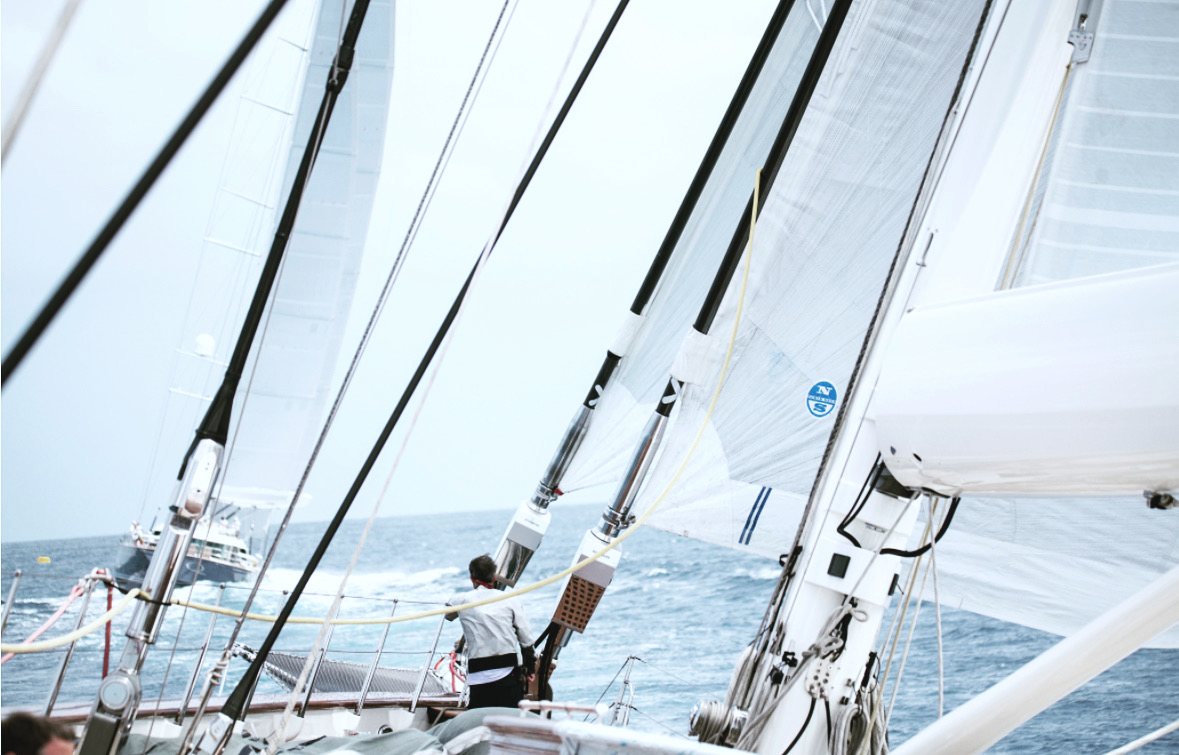
Psychological First Aid at Sea
Every crew knows what to do about a wound, almost none know what to do about the fear.
The missing part of the medical kit.
The WHO Look, Listen & Link model adapted for maritime.

Resilience at Sea
Resilience at Sea — a 27-page handbook for superyacht crew on the people problems nobody trains you for: an owner losing their temper, a crewmate falling apart, and the aftermath everyone pretends didn't happen.
With practical scripts, clear escalation thresholds, and a tear-out quick reference. Not therapy, not clinical training. The words to use when help is hours away.
.
About Amanda
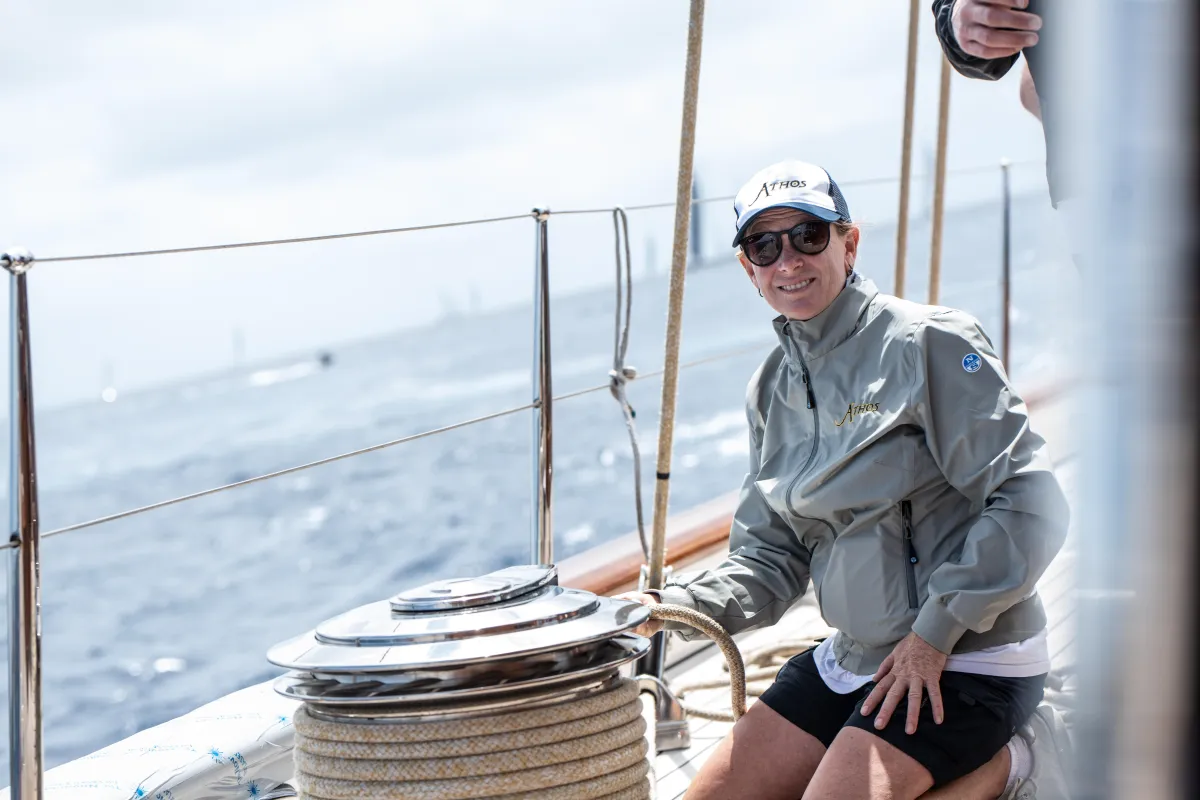
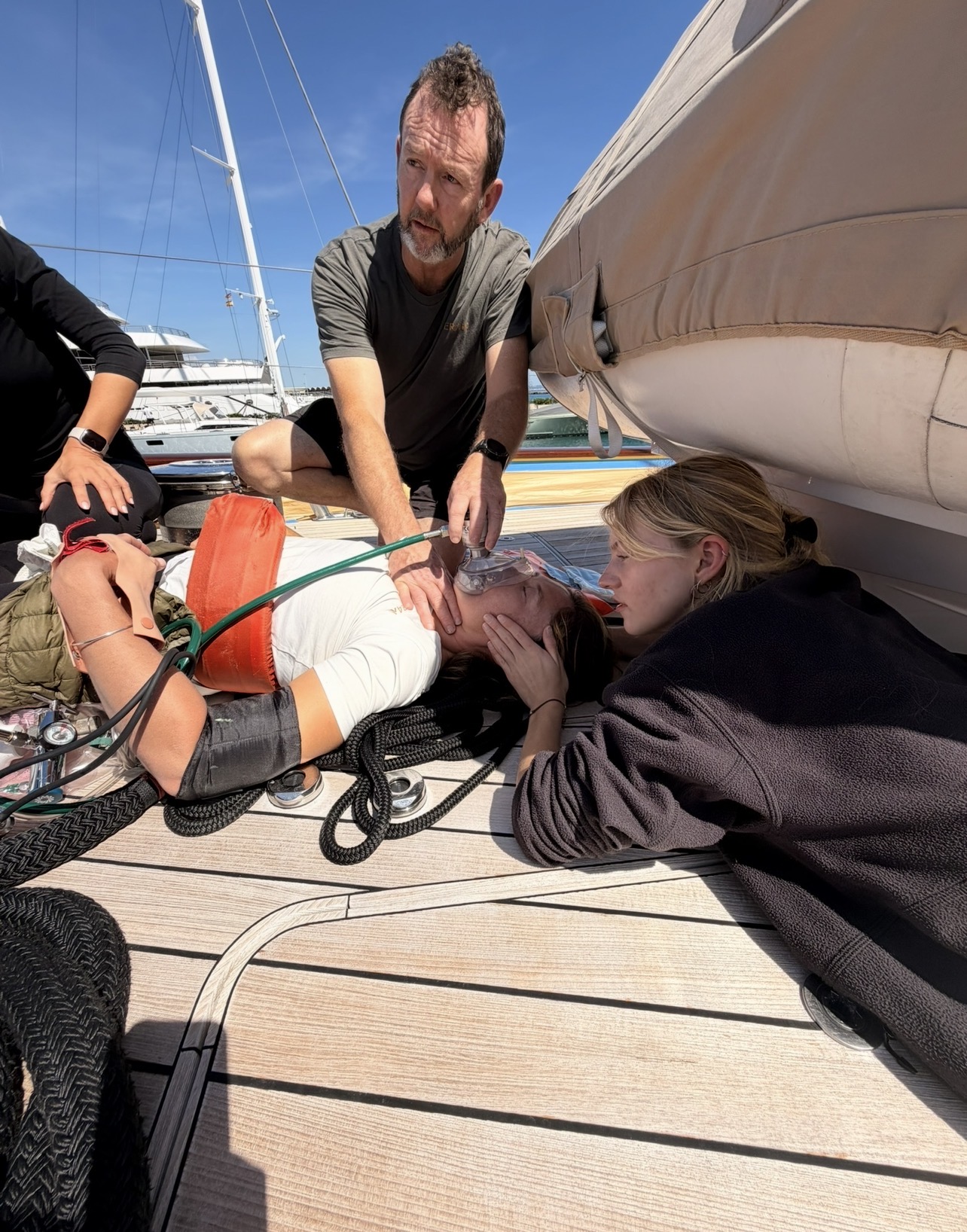
The Yacht Medic is Amanda Hewson Beaver — a registered nurse, former paramedic, and rescue and retrieval nurse who has been the nearest person more times than she can count. In the outback, in refugee camps, offshore, and on the deck of a boat a long way from help.
She has been the medic on the Sydney Hobart, the Fastnet, and the Rolex 600, and has trained Olympic, Ocean Race, America's Cup, and J Class teams. She teaches what she has actually done — which is why crew remember it.
Handling Shoulder Dislocations on Race Yachts
Offshore Medicine, Sailing Safety, Shoulder Dislocation
When a Shoulder Dislocates on a Race Yacht: Lessons from St Barths Superyacht Racing
High‑performance sailing is exhilarating, but when a shoulder dislocates mid‑race, the situation can turn serious in seconds. Drawing on the scenario in “Dislocations at Sea – St Barths Superyacht Racing Medical Series”, this guide explains why shoulder dislocations happen on race yachts, how to recognize them quickly, and what to do on deck before professional help or evacuation is possible.
The Reality of Shoulder Dislocations in Yacht Racing
In the St Barths Superyacht Racing Medical Series, the dislocation scenario unfolds in a way that will feel familiar to many offshore crews: tight manoeuvres, powerful loads on sheets and winches, and a split second of imbalance. One crew member reaches, twists, or braces against a sudden movement of the boat—and their shoulder “goes out”. The pain is immediate, the arm is useless, and the race dynamic changes instantly.
Unlike a shore‑side incident, there is no quick ambulance ride or immediate X‑ray. You are on a moving platform, often in swell, with limited equipment and a team focused on sailing. That is why understanding common causes, early signs, and the right on‑deck response is essential for skippers, medics, and every member of the crew.
Common Causes of Shoulder Dislocation During Sailing
The shoulder is the most mobile joint in the body—and one of the most vulnerable. On a race yacht, several high‑risk moments mirror what is described in the St Barths case study:
Sudden loading of the arm – A crew member grinding, tailing a sheet, or holding a rail when the boat lurches can have their arm forced backward or outward. A powerful jerk on the arm is a classic mechanism for an anterior shoulder dislocation.
Falls on a moving deck – Slipping on a wet deck, missing a footing in a tack or gybe, or being thrown across the cockpit can lead to an outstretched arm impact. The force drives the head of the humerus out of the socket, particularly in lighter, more flexible sailors or those with previous injuries.
Reaching and overextension – Leaning far out to grab a line, fend off a fender, or adjust hardware can place the shoulder in a vulnerable “cocked” position—arm abducted and externally rotated—where even a modest force can cause dislocation.
Previous shoulder instability – As highlighted in offshore medical training, a history of dislocation or lax ligaments significantly increases the risk of recurrence. On a superyacht race team, where many sailors have long athletic histories, this is common and often under‑reported until something goes wrong.
Contact with hardware or other crew – In tight manoeuvres, shoulders can be forced into awkward angles against winch pedestals, stanchions, or another crew member’s body, especially in a broach or unexpected wave impact.
Understanding these mechanisms helps skippers and safety officers brief crews realistically before racing: where your body is, how you brace, and when to let go can be the difference between a clean manoeuvre and a serious joint injury.
Signs and Symptoms of a Shoulder Dislocation On Deck
In the St Barths scenario, the injured sailor knows something is very wrong almost immediately. Recognizing a dislocation quickly allows the crew to stop dangerous movements and begin structured care. Key signs and symptoms include:
Sudden, severe shoulder pain – The pain is sharp and intense from the first moment, often described as “something has popped out” or “my shoulder is out of place”.
Visible deformity or unusual contour – In an anterior dislocation, the normal rounded curve of the shoulder flattens. You may see a prominent “ball” (the humeral head) pushed forward and down, with a hollow under the acromion where it should sit.
Guarding and fixed arm position – The casualty typically holds the injured arm slightly away from the body, supported by the other hand, and refuses to move it. Any attempt at movement causes a spike in pain.
Limited or absent shoulder movement – They cannot lift, rotate, or use the shoulder in a normal way. Even small adjustments of the torso can hurt because the joint is unstable.
Numbness, tingling, or weakness in the arm or hand – Nerves around the shoulder can be stretched or compressed during dislocation. Any change in sensation or strength is a red flag that must be relayed to telemedicine support immediately.
Swelling and muscle spasm – Within minutes, the area may swell, and the surrounding muscles go into protective spasm, further locking the joint in its abnormal position.
Importantly, not every painful shoulder is a simple dislocation. Fractures of the collarbone, upper arm, or shoulder blade can present in a similar way, especially after a direct impact. This uncertainty is one of the key reasons the St Barths series and other offshore medical frameworks stress early telemedicine consultation rather than guessing the diagnosis and attempting a reduction on deck.
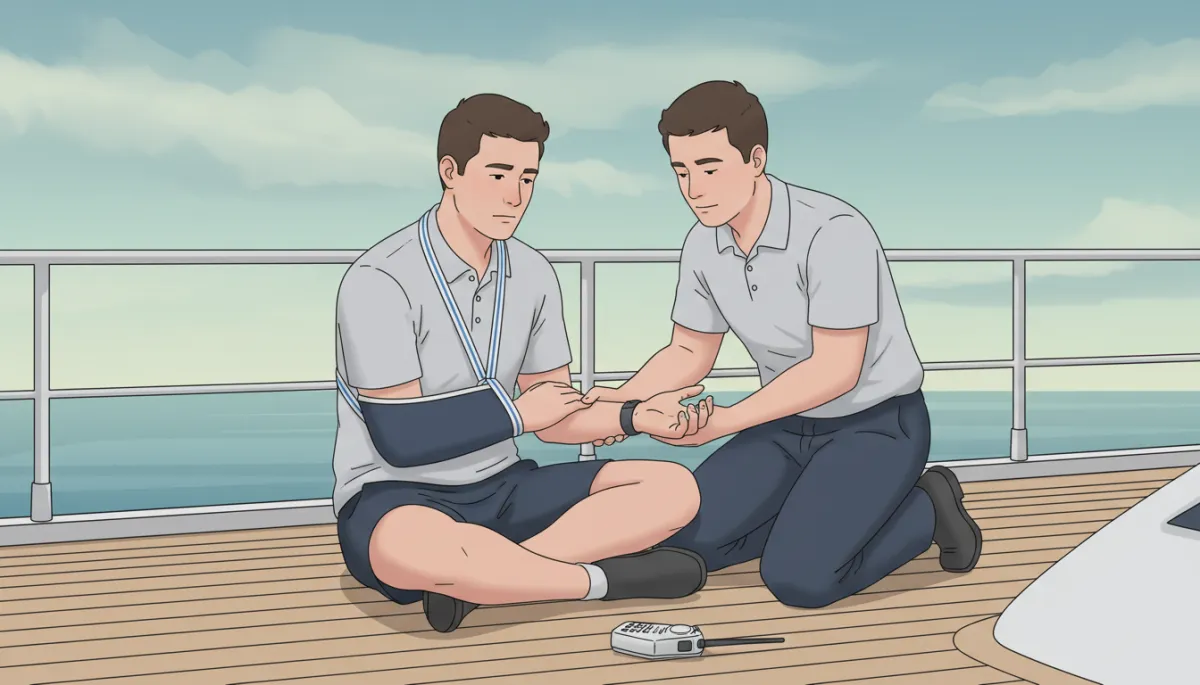
Simple support, calm assessment, and early communication are more important than dramatic interventions.
The Importance of a Calm, Structured On‑Deck Response
When a shoulder dislocates in the middle of a race, the instinctive reactions can be unhelpful: crowding the casualty, pulling on the arm, or trying to “pop it back in” because someone once saw it done on a beach or in a rugby match. The St Barths training scenario shows a different approach—disciplined, methodical, and safety‑first.
📌 Key Takeaway: Your primary goals are to protect the casualty from further harm, relieve pain as far as your training and equipment allow, and gather clear information for remote medical support—not to fix the joint yourself.
A structured response typically involves:
Taking control of the scene – A designated first‑aider or medical lead should step in, ask non‑essential crew to give space, and ensure no one moves the injured arm unnecessarily. The skipper should be informed promptly so they can adjust the race plan if needed.
Moving the casualty to a safer position – If conditions allow, help them sit or lie in a stable, protected area of the deck or below, keeping the arm in the position they find least painful. Avoid narrow walkways or exposed areas where waves or sudden manoeuvres could cause another fall.
Reassuring and explaining – Pain and fear can escalate quickly. Calm, clear communication—“We’re going to support your arm, check your circulation, and speak to the doctor ashore now”—goes a long way in keeping the situation stable.
This calm, structured approach is exactly what offshore medical training aims to instil. On a superyacht, where crews are often multinational and roles highly specialized, pre‑race briefings about who leads in a medical event can prevent confusion when seconds matter.
Critical Steps for Stabilizing and Assessing the Injury
Once the immediate chaos has settled, the priority is to stabilize the shoulder and perform a focused assessment, all while avoiding any forceful movement. The St Barths series emphasizes a few key principles that are realistic for race yachts and cruising boats alike.
1. Support the Arm in the Position of Comfort
Do not attempt to straighten, rotate, or lift the arm into what you think is a better position. Instead:
Allow the casualty to guide you: ask, “Where is it least painful for you to hold it?”
Use a sling and swathe if available—or improvise with sail ties, triangular bandages, or even a T‑shirt—to support the forearm and gently secure the arm against the chest.
2. Check Circulation, Sensation, and Movement Distally
Before and after any immobilization, quickly assess the limb beyond the injury:
Circulation: Is the hand warm and pink? Can you feel a pulse at the wrist if you are trained to do so? Is there any worrying change in colour compared to the other hand?
Sensation: Ask the casualty if they can feel light touch on their fingers and the back of the hand. Any numbness or “pins and needles” should be noted carefully for telemedicine.
Movement: Without moving the shoulder, can they gently wiggle their fingers and wrist? Do not force them to lift the arm.
💡 Pro Tip: Write down these findings with the time. Offshore doctors rely on this information to judge whether blood vessels or nerves could be compromised and how urgent evacuation might be.
3. Pain Relief Within Your Training and Kit
If your yacht’s medical kit and your training allow, appropriate pain relief can be offered while you await telemedicine advice. This may be simple oral analgesics or, on medically equipped superyachts, stronger medications administered under protocol. In all cases:
Follow your standing orders or race‑specific medical guidelines.
Document what was given, when, and at what dose to report to the telemedicine provider and any receiving hospital.
4. Ongoing Monitoring in a Moving Environment
At sea, conditions change. Swell increases, the yacht tacks, or a squall passes through. The casualty may be moved below decks or into a bunk. Each change is an opportunity for the shoulder to be jostled or the sling to slip. Assign a crew member to:
Check that the sling remains supportive and not too tight around the neck or chest.
Reassess circulation and sensation in the hand at intervals or if the casualty reports new symptoms.
Why Calling Telemedicine Early Is Essential
One of the strongest messages from “Dislocations at Sea – St Barths Superyacht Racing Medical Series” is that telemedicine is not a last resort; it is a core part of your first response. As soon as the casualty is safe and the basic assessment completed, the next step is to contact your remote medical provider via satellite phone, VHF relay, or dedicated telemedicine platform.
Early telemedicine contact matters because:
Diagnosis is not always straightforward. What looks like a simple dislocation may hide a fracture of the upper arm or socket, a torn rotator cuff, or vascular injury. The doctor will ask targeted questions about the mechanism, deformity, nerve symptoms, and your findings on circulation to build a clearer picture than you can alone on deck.
They can tailor your next steps. Based on your position, weather, and race context, telemedicine can advise whether to continue racing, divert, or arrange rendezvous with support vessels. They can also guide pain management, positioning, and monitoring over the following hours.
They document and coordinate care. A telemedicine consultation creates a medical record that can be passed to shore‑side emergency departments, speeding up imaging and definitive treatment once you arrive in port.
📌 Key Takeaway: Treat telemedicine as part of your on‑board medical team. Call early, not after several improvised attempts to fix the problem have failed.
Why You Must Avoid Aggressive Attempts to Reduce the Shoulder
In many sports, people tell stories of “just popping it back in”. On a race yacht, with limited diagnostics and variable skill levels, this attitude can be dangerous. The St Barths medical series is clear: do not attempt forceful, aggressive shoulder reductions without professional guidance.
The Hidden Risks of DIY Reductions
Undetected fractures: If the upper arm or socket is fractured, pulling or twisting the arm can displace bone fragments, convert a stable fracture into an unstable one, or even damage blood vessels and nerves permanently.
Nerve and vessel injury: The major nerves and arteries around the shoulder are vulnerable. An overly forceful manoeuvre can stretch or tear them, turning a painful but survivable injury into a limb‑threatening emergency far from definitive care.
Inadequate pain control and muscle spasm: Without proper analgesia and muscle relaxation, the shoulder muscles resist reduction. This leads to repeated, painful attempts that fail and increase tissue damage.
What “No Aggressive Attempts” Means in Practice
On deck, this principle translates into clear behavioural rules:
Do not pull hard on the arm, rotate it forcefully, or use improvised techniques you have seen online or in films.
Do not allow untrained crew—no matter how well‑intentioned—to “have a go” because they once had their own shoulder reduced on shore.
If, under telemedicine guidance, a gentle, specific technique is suggested for a known recurrent dislocator, follow the doctor’s instructions precisely, with clear stop points if pain or resistance increases.
⚠️ Warning: Your responsibility as skipper or medical lead is to first, do no further harm. It is far better to arrive in port with a shoulder still dislocated but intact blood supply than to cause an avoidable nerve or vessel injury at sea.
Integrating These Lessons into Your Race Preparation
The scenario in “Dislocations at Sea – St Barths Superyacht Racing Medical Series” is not an isolated story; it is a realistic rehearsal for any high‑energy regatta. To turn these insights into practical safety gains, consider the following before your next campaign:
Pre‑race medical briefings: Discuss common injuries, including shoulder dislocations, and agree who takes the medical lead. Make sure everyone knows that aggressive on‑deck reductions are off‑limits without telemedicine direction.
Equipment checks: Confirm you have adequate slings, bandages, and pain relief in the medical kit, and that crew know where these are stored. Practice improvising slings from everyday gear during a quiet training day.
Telemedicine readiness: Test your communication channels, have emergency numbers readily accessible, and rehearse the kind of concise, structured handover a doctor will need: mechanism of injury, symptoms, circulation/sensation findings, and vital signs if available.
Conclusion: Calm Over Heroics When a Shoulder Fails at Sea
A shoulder dislocation on a race yacht is dramatic, painful, and disruptive—but it does not have to become catastrophic. By understanding the common causes during sailing, recognizing the signs and symptoms early, and adopting a calm, structured on‑deck response, crews can protect both the injured sailor and the wider team.
The core lessons from the St Barths Superyacht Racing Medical Series are clear: stabilize, assess, communicate, and avoid aggressive attempts to reduce the shoulder without professional guidance. In the confined, moving world of an offshore race, choosing caution over improvisation is not a sign of weakness—it is the mark of a truly professional crew.